Table of Contents
Learn how to decide when to use SMS vs email so your campaigns feel intentional and not repetitive.
Today’s customers don’t live in siloes—they jump between devices and channels as they research and buy. In fact, 73 % of shoppers engage with brands across multiple channels before making a purchase.
That’s why a marketing plan that treats email and SMS as rivals won’t cut it anymore. Both channels reach audiences in different ways, and both play valuable roles at different stages of the journey.
So, what does good balance look like? It’s not email versus SMS, but a coordinated approach that uses each channel where it shines most. Some messages are richer and better suited to email; others are urgent and need the immediacy of SMS. Today, we’ll show you how to create one.

What you’ll learn
- How to decide when to use SMS vs email so your campaigns feel intentional and not repetitive.
- How to segment and personalize cross-channel messaging that resonates with different audience groups.
- Practical tips for orchestrating sequences where email informs and SMS prompts action.
- Ways to measure and optimize combined campaigns for stronger engagement and results.
Understanding email and SMS marketing strengths
SMS strengths
SMS marketing really shines when you need immediate engagement. Because text messages land directly on people’s mobile phones and get noticed fast, SMS campaigns often see extremely high open rates, with most texts read within minutes. Such performance makes text message marketing ideal for time-sensitive offers, reminders, and urgent updates where you want customers’ attention right now.
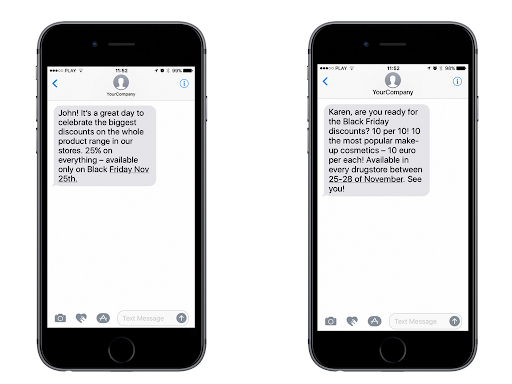
This direct line to your audience also helps SMS marketing campaigns cut through crowded inboxes and deliver promotional text messages that feel personal and relevant—as long as you don’t overwhelm subscribers!
SMS marketing still dominates on attention. Text messages enjoy up to 98 % open rates and most are seen within minutes, making SMS ideal for urgent or time-sensitive messaging.
Email strengths
Email marketing campaigns excel in a different way. They give you room for richer content, storytelling, visuals, and detailed offers. That makes email a go-to for newsletters, onboarding sequences, product announcements, educational content, and long-form engagement that supports broader digital marketing goals.
With email, you can include many links, images, multiple sections, and a stronger narrative, which helps with brand building, customer retention, and guiding subscribers deeper into your customer journey.
When not to overuse either
Neither channel works if you treat it like your only one. Too many SMS messages can feel intrusive; especially if they interrupt someone’s day or come without clear value, which can push even your most engaged SMS subscribers toward opt-outs.
Likewise, email campaigns can get ignored or filtered out in a busy inbox unless they’re carefully segmented and truly relevant. Without thoughtful targeting, your email and SMS marketing efforts start to feel like noise rather than helpful touchpoints.
Unlike cold email, which focuses on first contact and outreach to new prospects, email and SMS marketing rely on consent and ongoing relationships—making relevance and timing far more important than volume.
How to start combining SMS and email marketing campaigns
#1 Define your goals before you choose channels
Before you start deciding when to send SMS marketing messages or how often to send email campaigns, you need a clear sense of what you’re trying to accomplish. Setting goals up front helps you decide which marketing channels will serve each objective best, instead of guessing or defaulting to whatever feels familiar.
Set clear KPIs for both email and SMS
Start by outlining measurable goals for each channel. Typical key performance indicators include:
- Open rates and click-through rate for both email messages and SMS text message campaigns
- Conversions or actions taken after receiving a touchpoint
- Growth of email subscribers and sms subscribers lists
These metrics help you see which messages are earning engagement and which aren’t—and whether your marketing messages are reaching the right audience at the right moment.
Plan channel roles based on goals
Once your KPIs are set, define how each channel should contribute to your broader plan:
- Immediate action vs deep engagement: For time-sensitive communications like flash sales, urgent alerts, appointment reminders, or VIP early access, SMS text messages tend to perform best because they reach people instantly on mobile devices and prompt fast responses. For content that needs explanation, narrative, visuals, or long form content, email messages give you more room and flexibility.
- Awareness vs purchase vs retention: If your goal is to raise awareness or educate your audience, email campaigns allow you to deliver richer content with images, detailed offers, and thoughtful sequencing. But if you’re focused on driving immediate purchases or re-engaging existing customers, an SMS program paired with timely emails can boost engagement without overwhelming people with too many messages.
If your goal is brand awareness, email campaigns allow you to deliver richer content with images, storytelling, and education that builds familiarity over time, while SMS supports timely nudges rather than full narratives.
Decide based on audience and channel context
Not every message needs to be on both channels. A preferred communication channel should be chosen based on what you already know about your audience (for example, some customers may engage more with text message marketing while others respond better to marketing emails).
Understanding where your most engaged subscribers come from and how they behave helps you tailor your mix of SMS and email marketing messages without forcing either format where it doesn’t belong.
Outline your goals first, then let them guide whether a promotional push is best as an email, an SMS text, or a coordinated sequence that uses both.
#2 Build unified subscriber data and preferences
Don’t let your email campaigns and SMS marketing messages act like strangers to each other. To deliver relevant, personalized messages that feel natural—not repetitive or intrusive—you need a single, unified view of each customer.
- Start with consent at the moment of signup. When someone joins your list, give them the option to receive both SMS text message alerts and marketing emails, with clear consent that complies with GDPR and other privacy laws. That way you’re not guessing their preference later… you know what they want.
- Let subscribers choose their preferred communication channel and what kinds of messages they want from you. Some may only want email newsletters and offers, others might prefer time-sensitive SMS promotions, and many will want both. Capturing these choices up front lets you send targeted messages instead of bombarding people with too many messages across all channels.
- Finally, tie phone numbers and email addresses together in one customer profile rather than keeping them in separate systems. When your email and SMS programs share data and preferences, you avoid conflicting messages and create a smoother experience for your audience. A unified profile also makes it easier to personalize promotions to maintain a consistent brand voice across every interaction.
#3 Segment your audience intelligently
One of the biggest keys to better email and SMS marketing isn’t more messages — it’s smarter targeting. When you break your audience into meaningful groups based on how they behave, your sms channels and email campaigns feel more relevant, timely, and personal. That drives stronger engagement and better results than blasting everyone the same message.
Start with behavior
Look at how people have interacted with your brand (what they’ve bought, when and where, whether they open your email messages, and how they respond to SMS text message campaigns). That’s how you create segments that can drive higher engagement across channels.

Here are three practical examples you can use right away
- High-engagement segment: Customers who open most of your emails and respond to SMS texts make up your most engaged subscribers. For them, you might send exclusive offers, early access to new products, or VIP-only SMS and email content. These people are your champions—treat them that way.
- Behavior-based purchase segment: Group people based on past purchases or browsing behavior. If someone has bought running shoes, follow up with targeted email campaigns about complementary gear, and use sms marketing messages for time-sensitive promotions like limited-time discounts on socks or fitness accessories.
- Lapsed or low-engagement segment: Not all subscribers engage regularly. Create a segment for people who haven’t opened recent emails or clicked your texts. For these, try a re-engagement push—a special offer via email, followed by a well-timed SMS reminder that nudges them back into your ecosystem with something that feels valuable.
Segmenting like this lets you tailor your marketing messages across both channels instead of sending the same one message to everyone. Over time, use your engagement data to refine segments and adjust your strategy so that each touch feels more personal and more relevant.
#4 Orchestrate cross-channel campaigns
Think of your marketing channels like instruments in an orchestra – each sounds great on its own, but they really sing when they play in sync. The same idea applies to email and SMS marketing: when you purposefully coordinate both, you improve overall customer engagement and drive stronger results than if you treated them separately.
Brands using SMS and email in sync see stronger performance overall: email supports rich content and storytelling, while SMS delivers short, direct prompts that drive action when timing matters.
Lead with email, follow up with SMS
Email gives you the space to set the scene — rich context, visuals, links, and brand storytelling. That makes it perfect for introducing offers, sharing detailed product info, or explaining value before a big push. Then, as a deadline nears or action becomes urgent, a short sms text message can act as the nudge that turns interest into action.
Think of email as the conversation and SMS as the prompt that moves people to act.
Use SMS for time-critical hooks
Because text messages are read quickly on mobile devices, SMS shines for time-sensitive messages like last-day reminders, flash discounts, limited-time codes, or critical updates. These are moments when a subtle push through direct communication can meaningfully lift conversions without overloading other channels.
Reserve email for deeper content
Email still wins when you need rich formatting options, storytelling, or explanation. Use it for newsletters, product education, editorial content, post-purchase journeys, and other touches that benefit from visuals, multiple links, or narrative depth. While SMS keeps things short and urgent, email builds context and trust over time.
Letting email lay the groundwork and SMS deliver the timely prompt serves your audience a better customer experience across both marketing channels rather than feeling hit with the same offer twice.
#5 Balance frequency and timing
Sending messages that resonate depends not just on what you say, but how often and when you say it. Both email campaigns and SMS marketing can drive incredible engagement, but if you send too many messages too quickly, you risk annoying your audience and increasing opt-outs — especially with SMS, which lands directly on people’s phones.
Respect the recipient experience. Think of your audience first: too many texts or emails in a short period can feel intrusive. SMS text messages are powerful because they usually reach most users quickly, but that means over-messaging can lead to fatigue and unsubscribes.
Create clear trigger rules for each channel
- Use SMS for urgent, short, actionable communications – time-sensitive offers, appointment reminders, and deadline nudges benefit from the immediacy of text message marketing.
- Reserve email for comprehensive, planned content like newsletters, deep product stories, and educational sequences that take advantage of email’s rich formatting options and space for detail.
Also, measure fatigue and adjust. Watch opt-out rates, engagement trends, and customer feedback to find the right rhythm. If unsubscribes spike after adding messages to either channel, dial back the frequency or refine your targeting.
Quick frequency checklist
- Expectations set: Tell subscribers what to expect (how many messages, from which channels, and for what purpose).
- Channel purpose defined: SMS = urgent/actionable; email = rich/contextual content.
- Frequency monitored: Track opt-outs and engagement to detect fatigue early.
- Adjust based on data: Use performance insights to refine send patterns and timing.
#6 Track and optimize across both channels
Getting real results from your email and SMS marketing means watching what actually happens after you hit send. Here’s how to track and refine your performance so your marketing strategies improve over time:
Do:
- Do tag links with UTM parameters so you can track how both email and SMS contribute to traffic and conversions – this gives you a clear picture of campaign performance across channels.
- Do compare key metrics by channel (clicks, conversions, engagement) to see what’s working best and where to refine your approach.
- Do use tracking insights to optimize sequencing, timing, and content so your combined efforts deliver a smoother, more effective experience for your audience.
Don’t:
- Don’t skip consistent tracking across channels – without analytics, it’s impossible to know whether your SMS or email campaigns are driving results.
- Don’t ignore testing – if you don’t experiment with different sequences, offers, or timing, you’ll miss opportunities to improve performance.
- Don’t assume results are obvious without data – traffic and conversions can look similar on the surface unless you break them down by source. Tagging and analysis ensure you’re optimizing the right elements.
#7 Use automation to maintain the balance
Imagine your marketing system acting like a smart assistant that knows what each customer did and what they need next. That’s what automation does: it uses behavior-based triggers so your emails and SMS flow together in a way that feels natural and helpful.
Here’s how you can tackle it:
1. Welcome and onboarding journey
As soon as someone signs up, automation can kick off a sequence that introduces your brand gently. A welcome email can deliver richer content about your product, and an SMS text message can follow with a quick link to a “Get started” checklist or tip—giving new subscribers clear next steps on their preferred channel without you manually sending anything. This kind of triggered flow sets a positive tone and improves early engagement.
2. Abandoned cart reminders across channels
Then, when someone adds items to their cart but doesn’t checkout, a well-designed automated flow can reach them where they’re most likely to act. An email can surface product details and benefits, while an SMS text message can serve as a short, time-sensitive reminder to complete the purchase. These automated nudges—timed based on behavior—recover potential sales that might otherwise be lost.
3. Post-purchase and lifecycle engagement
After a purchase, automation can keep the conversation going by following up with a thank-you message, cross-sell suggestions, or a request for feedback. An email might deliver more context and visuals, while an SMS text message can provide a quick prompt to leave a review or check a loyalty reward. By aligning the two channels in this post-purchase phase, you reinforce a seamless customer experience instead of fragmented touchpoints.
In each scenario, automated triggers are based on what a person does, not just when the calendar says to send something. That’s the key to balanced, relevant touchpoints that use both SMS and email effectively – but without overwhelming your audience.
Just as teams rely on cold email software to automate outreach sequences and track responses, SMS and email automation tools help orchestrate behavior-based flows that react to what users actually do.
How SMSAPI can help your marketing plan
If you want to add text messages to your mix of other marketing channels in a way that’s both effective and respectful of your audience, SMSAPI can play a key role. At its core, SMSAPI is a reliable platform for sending SMS marketing messages and notifications globally—either through a user-friendly interface or by integrating its API directly with your systems.
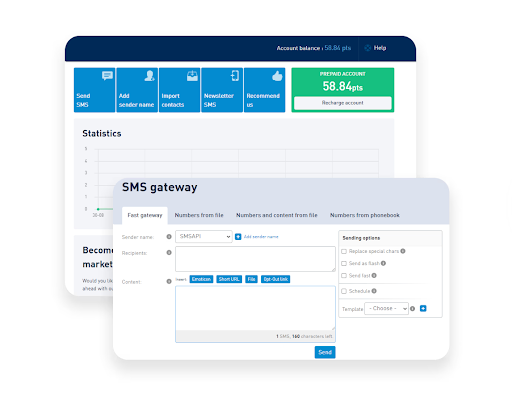
One of the biggest advantages SMSAPI offers is reach and deliverability. Because text messages go straight to mobile phones across carriers worldwide, you can reliably deliver time-sensitive communications like flash offers, reminders, or alerts to your opted-in contacts.
SMSAPI also makes it easy to manage your target audience preferences and consent, which is crucial in any sms vs email marketing strategy where you’re balancing between channels. You can import and segment contact lists, automate sends based on behavior or events, and even collect two-way responses through features like 2-way SMS.
Because SMS boasts (still!) high engagement rates and immediate visibility, it complements email beautifully—offering a direct communication channel when urgency, brevity, and speed matter most. With SMSAPI, you gain the tools to send the right message on the right channel, as part of a broader, integrated marketing plan rather than relying on SMS alone.
Test SMSAPI
Create a free account at SMSAPI and test the professional SMS gateway for companies.
Conclusion
When you bring SMS and email together as part of a unified plan, you tap into two powerful ways to reach your audience that support each other. Text messages reach people almost instantly (across mobile carriers and devices) and are opened far more quickly than email. Meanwhile, direct mail gives you the space to explain, educate, and build longer-lasting connections.
There’s no SMS marketing vs email marketing, and for a few reasons.
Smart marketers don’t choose between SMS and email. They use both in a way that respects preferences and timing while guiding people along their journey. A coordinated mix helps you create a more seamless customer experience and stronger customer relationships because every touchpoint feels intentional and relevant.
If you want to make this work in your own campaigns, SMSAPI gives you the tools to send, segment, automate, and measure SMS alongside your broader strategy—so you can connect with your audience where they prefer to be reached and get better results overall.