Table of Contents
Learn how SMS lifecycle marketing helps brands use text messages for acquisition, conversion, retention, service, and reactivation.
A customer does not move from “never heard of you” to “loyal buyer” in one clean jump. They notice, compare, hesitate, buy, wait, ask questions, come back, forget, and sometimes disappear. If your SMS marketing only shows up when you want to push a promotion, you miss most of the useful moments in that journey.

Test SMSAPI
Create a free account at SMSAPI and test the professional SMS gateway for companies.
SMS lifecycle marketing fixes that. It treats text messages as part of the full customer relationship, not as a random campaign blast. The goal is not to text everyone more often. The goal is to send fewer messages with better timing, clearer purpose, and a stronger reason to act.

What you’ll learn?
- What SMS lifecycle marketing means?
- How SMS fits into each stage of the customer journey?
- When to use promotional, transactional, reminder, and support SMS?
- How to build SMS flows for acquisition, activation, conversion, retention, service, and reactivation?
- Which SMS messages should be automated first?
- How to connect SMS with ecommerce, CRM, booking, and analytics tools?
- How to measure SMS campaigns beyond clicks?
- How SMSAPI supports lifecycle messaging through API, integrations, reporting, and global SMS sending?
What is SMS lifecycle marketing?
SMS lifecycle marketing means using text messages at different stages of the customer journey. Instead of sending one campaign to everyone, you match each message to the customer’s current situation.
A new subscriber may need a welcome message. A shopper may need a cart reminder. A customer may need an order update. A client may need an appointment reminder. A dormant buyer may need a careful reactivation offer.
The same channel can serve many jobs. The difference comes from context.
| Lifecycle stage | Customer situation | SMS role | Example message |
|---|---|---|---|
| Acquisition | Visitor joins your list | Confirm consent and set expectations | Thanks for joining. You’ll get delivery updates and member offers here. |
| Activation | New lead or customer needs to take the first step | Help them act | Your account is ready. Complete your setup here: [link] |
| Conversion | Customer shows buying intent | Remove friction | Your cart is saved until midnight: [link] |
| Transactional | Customer completes an action | Confirm or update | Order #4021 is on the way. Track it here: [link] |
| Retention | Customer should return or repeat | Encourage the next useful action | Your 30-day refill reminder: reorder here: [link] |
| Service | Customer needs information or support | Reduce uncertainty | Your appointment is tomorrow at 10:30. |
| Reactivation | Customer has gone quiet | Rebuild attention carefully | Still interested? Your loyalty code is active until Sunday. |
That shift is important. SMS stops being “the discount channel” and becomes a customer communication layer. If your team is still setting up the basics, start with business SMS messaging before building more advanced lifecycle flows.
Why one-off SMS blasts are not enough anymore
A one-off SMS blast can work. A well-timed flash sale, event reminder, or delivery alert can drive action fast. The problem starts when every SMS campaign is treated the same way.
When everyone receives the same message, relevance drops. New leads, loyal customers, inactive buyers, cart abandoners, and support users do not need the same thing. A blanket discount may bring a short revenue spike, but it does not build a smarter system.
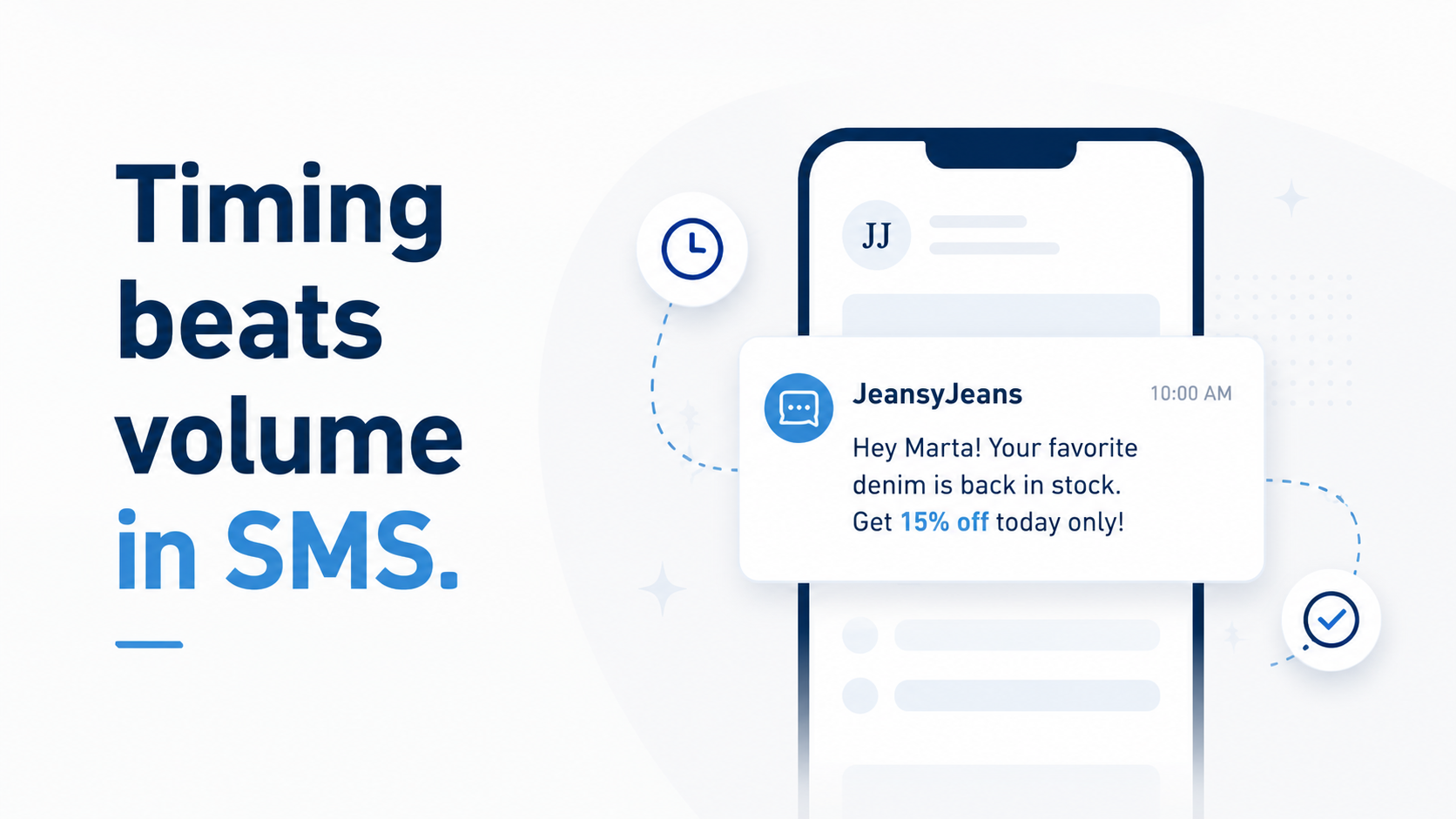
Lifecycle SMS works differently. It uses the customer’s stage, behavior, consent, and timing to decide what should happen next. A blast asks: “What do we want to send today?” A lifecycle flow asks: “What does this person need right now?” That difference changes the whole strategy.
| One-off SMS blast | SMS lifecycle flow |
|---|---|
| Campaign-first | Customer-stage-first |
| Often sent to a broad list | Sent to a relevant segment |
| Usually manual | Often automated |
| Focuses on short-term traffic or sales | Supports conversion, retention, service, and trust |
| Easy to overuse | Easier to control with triggers and rules |
| Harder to connect with customer intent | Built around customer behavior |
This does not mean you should never send campaigns. It means campaigns should sit inside a larger customer journey. A good SMS program can include seasonal campaigns, but it should not depend only on them.
Stage 1: Acquisition → collect consent before you need it
The SMS lifecycle starts before the first campaign. It starts when someone decides whether to share their phone number.
That moment needs a clear promise. “Sign up for texts” is not enough. People want to know what they will receive and why it is worth giving access to such a personal channel.
For ecommerce, the promise might be early access, delivery updates, price drops, or restock alerts. For service businesses, it may be appointment reminders. For events, it may be updates and last-minute changes. For B2B brands, it may be webinar reminders, report launches, or account notifications.
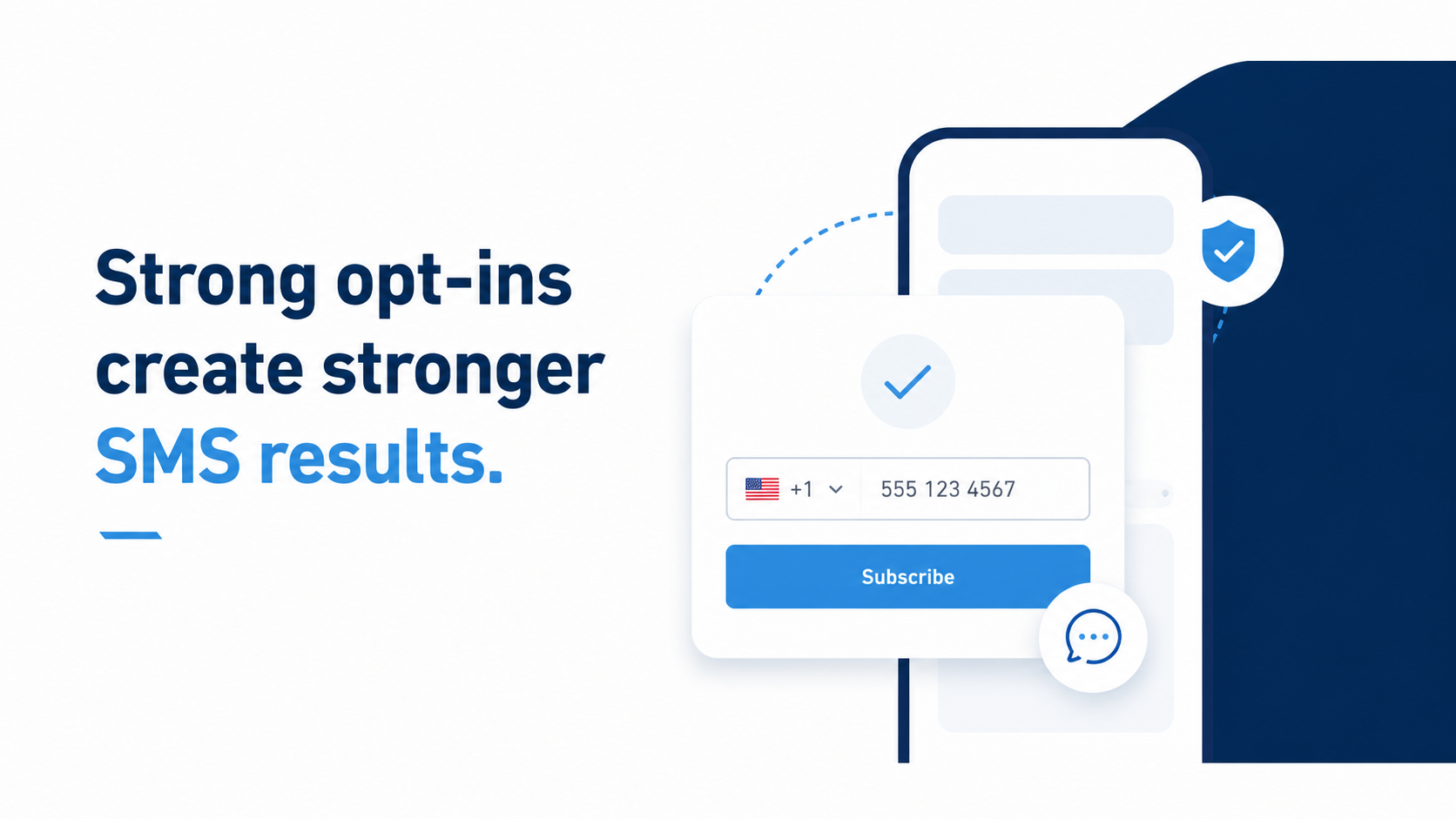
In more niche B2B journeys, the topic may be even more specific, in which case SMS should only go to contacts who clearly asked for that type of update.
A strong opt-in promise is specific: Get SMS updates about delivery, returns, and member-only offers.
A weak one is vague: Subscribe to our SMS list.
The first version tells people what to expect. The second asks for trust without giving much back.
A dedicated SMS Newsletter flow can help brands collect phone numbers around a clear value exchange. The list will usually grow slower than a generic form, but the quality is better.
Consent also needs to be honest and traceable. If the user agreed to appointment reminders, that does not automatically mean they want weekly promotions. If they agreed to delivery updates, do not quietly turn that into a discount channel.
That is why permission marketing matters so much in SMS. The channel works because people let you in. Treat that permission as something you keep earning, not something you exploit.
For EU audiences, review GDPR in SMS marketing before scaling list growth or mixing transactional and promotional messages.
Stage 2: Activation → help people take the first action
Activation is the first meaningful action after someone joins your list, creates an account, books a service, downloads an app, signs up for a trial, or starts checkout.
For B2B teams, this stage often starts before the first SMS. You need to know where to find prospects, then use lifecycle messaging only after there is clear consent and a relevant reason to follow up.
This stage is easy to overlook. Brands often focus on acquisition and conversion, while activation sits between them. But many customers drop off here because they need one small nudge.
How does an activation SMS help customers move forward?
Examples:
Your account is ready. Finish setup here: [link]Your trial starts today. Choose your first template: [link]Your consultation request was received. Pick a time here: [link]You’re on the list. Confirm your preferences here: [link]
Activation messages should not feel like sales pressure. The person has already shown interest. The SMS should reduce friction. The same logic applies outside ecommerce. A company using recruiting software for small business could use SMS to confirm interview slots, remind candidates about next steps, or help applicants complete missing details.
| Activation moment | SMS purpose | What to avoid |
|---|---|---|
| Account created | Help the user finish setup | Generic welcome text with no next step |
| Trial started | Point to the first useful action | Pushing upgrades too early |
| Consultation requested | Let the lead book a time | Asking them to wait for a manual reply |
| Newsletter joined | Confirm value and preferences | Sending a promotion immediately |
| Event registered | Confirm details | Overloading the message with full event copy |
For technical teams, activation SMS often works best when you send SMS using API from your app, CRM, ecommerce platform, or booking system. That way, the message reacts to the actual customer event.
Stage 3: Conversion → use SMS when timing decides revenue
SMS can be a strong conversion channel because it arrives fast and usually gets noticed. But that power should be reserved for moments where timing matters.
A customer who abandoned a cart has already shown intent. A shopper waiting for a restock has already shown demand. A lead who registered for a webinar may need a reminder. A customer who started payment but did not finish may need a short, clear prompt.
These messages work because they respond to behavior. They do not need to shout. They need to make the next step easy.
| Conversion trigger | Useful SMS angle | Example |
|---|---|---|
| Cart abandoned | Reminder with direct cart link | Your cart is still saved. Complete your order here: [link] |
| Product viewed twice | Soft product reminder | Still checking the leather backpack? See details here: [link] |
| Item back in stock | Availability alert | The black hoodie you wanted is back in stock: [link] |
| Price drop | Time-sensitive update | The jacket you viewed is now 20% off until midnight. |
| Webinar signup | Attendance reminder | Your webinar starts in 30 minutes. Join here: [link] |
| Payment started but not completed | Completion prompt | Your payment is almost done. Finish securely here: [link] |
For online stores, SMS marketing in ecommerce works best when it connects to shopping behavior, not just campaign dates. To make those triggers more accurate, ecommerce teams should connect SMS flows with e-commerce data analytics, so cart reminders, restock alerts, and product messages reflect what shoppers actually browse, compare, and buy.
A flow for abandoned cart recovery should also be tested carefully. One reminder may help. Too many reminders can make the brand feel pushy. For Shopify stores, the Shopify SMS module can help connect SMS communication with store activity instead of forcing teams to send conversion messages manually.
Stage 4: Transactional communication → reduce uncertainty after action
Transactional SMS messages confirm that something happened or update the customer about something important. They are not built around persuasion first. They are built around clarity.
What information can you send in a transactional SMS?
- order confirmations
- shipping updates
- delivery alerts
- payment confirmations
- account verification codes
- password reset messages
- appointment confirmations
- service status alerts
- booking updates
Transactional SMS may not feel like marketing at first, but it affects the customer relationship. A clear order update reduces anxiety. A fast verification code improves onboarding. A delivery alert prevents support questions. A booking confirmation builds trust.
| Transactional moment | Customer concern | SMS job |
|---|---|---|
| Order placed | “Did it go through?” | Confirm order details |
| Parcel shipped | “Where is my order?” | Share tracking link |
| Payment received | “Was my payment accepted?” | Confirm payment status |
| Appointment booked | “Is my slot reserved?” | Confirm date and time |
| Login attempt | “Can I access my account?” | Send verification code |
| Service disruption | “What is happening?” | Send clear status update |
The tone should stay simple. Do not mix every transactional SMS with a promotion. A customer waiting for delivery does not always need an upsell in the same message.
Teams should understand transactional SMS before they mix operational messages with marketing flows. Transactional and promotional communication can live in the same wider system, but they need different logic.
Stage 5: Retention → bring customers back without shouting
Retention SMS is not about chasing every customer with discounts. It is about finding moments where a return message actually helps.
A customer who bought skincare may need a refill reminder. A gym member may need a class prompt. A B2B user may need a product usage reminder. A local service client may need a follow-up visit. A loyal customer may deserve early access before a public sale.
Retention SMS supports!
- repeat purchases
- refills and replenishment
- loyalty programs
- renewal reminders
- subscription updates
- new product alerts based on interest
- post-purchase education
- review requests
- usage reminders
The best retention messages feel expected. They connect to what the customer already did. For community groups, schools, and nonprofits, that same principle can apply to fundraising ideas and updates. SMS can bring supporters back when the goal is close or when a deadline needs one final push.
Weak retention message: Come back and shop today!
Better retention message: Your coffee subscription renews tomorrow. Change your order here: [link]
The second message gives control. That matters. SMS can support the whole path to purchase when it appears at relevant moments, not only at the final sale.
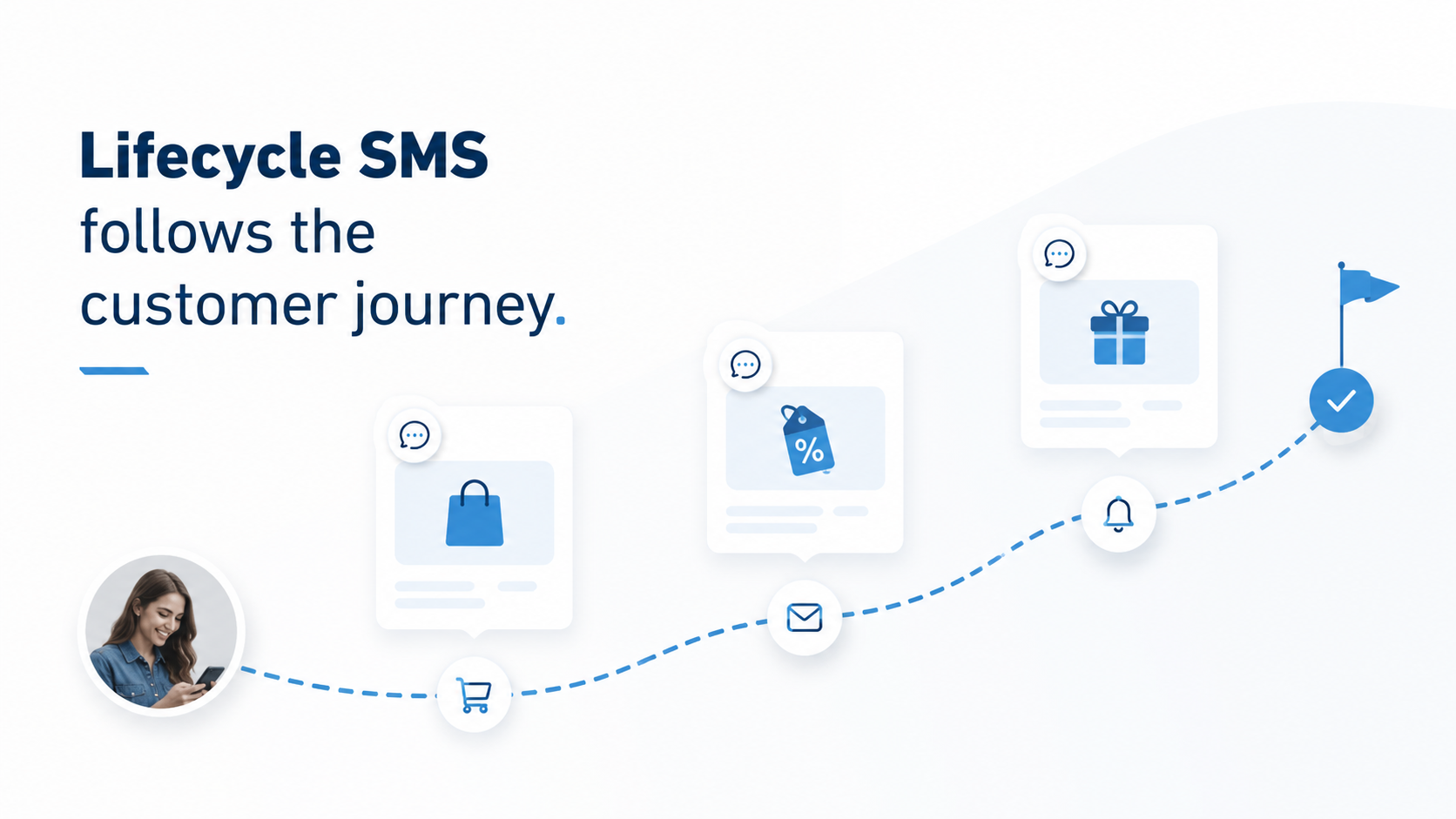
Stage 6: Service → use SMS to prevent support tickets
Customer service often gets pulled into avoidable questions:
- Where is my order?
- What time is my appointment?
- Did my booking go through?
- Can I reschedule?
- Is my payment confirmed?
SMS can answer many of these questions before they reach support. In staff-heavy service businesses, SMS workflows may also depend on internal availability. For example, a leave management app can help teams avoid reminders or confirmations that point customers to employees who are off that day.
For service businesses, appointment reminders are one of the clearest examples. A simple SMS sent the day before a visit can reduce no-shows and save admin time.
Example: Reminder: your appointment is tomorrow at 10:30 at Green Clinic. Reply CANCEL if needed.
This is not a fancy campaign. It is useful communication.
Service SMS – use cases
- booking confirmations
- queue updates
- support ticket updates
- payment reminders
- prescription or document pickup alerts
- delivery coordination
- satisfaction surveys
- incident notifications
A good service SMS respects the customer’s time. It does not turn every support message into a promotion. If appointments matter in your business, SMS appointment reminders can be one of the easiest lifecycle flows to start with. For businesses that want conversations instead of one-way alerts, receiving SMS online can support replies, confirmations, surveys, and customer support workflows.
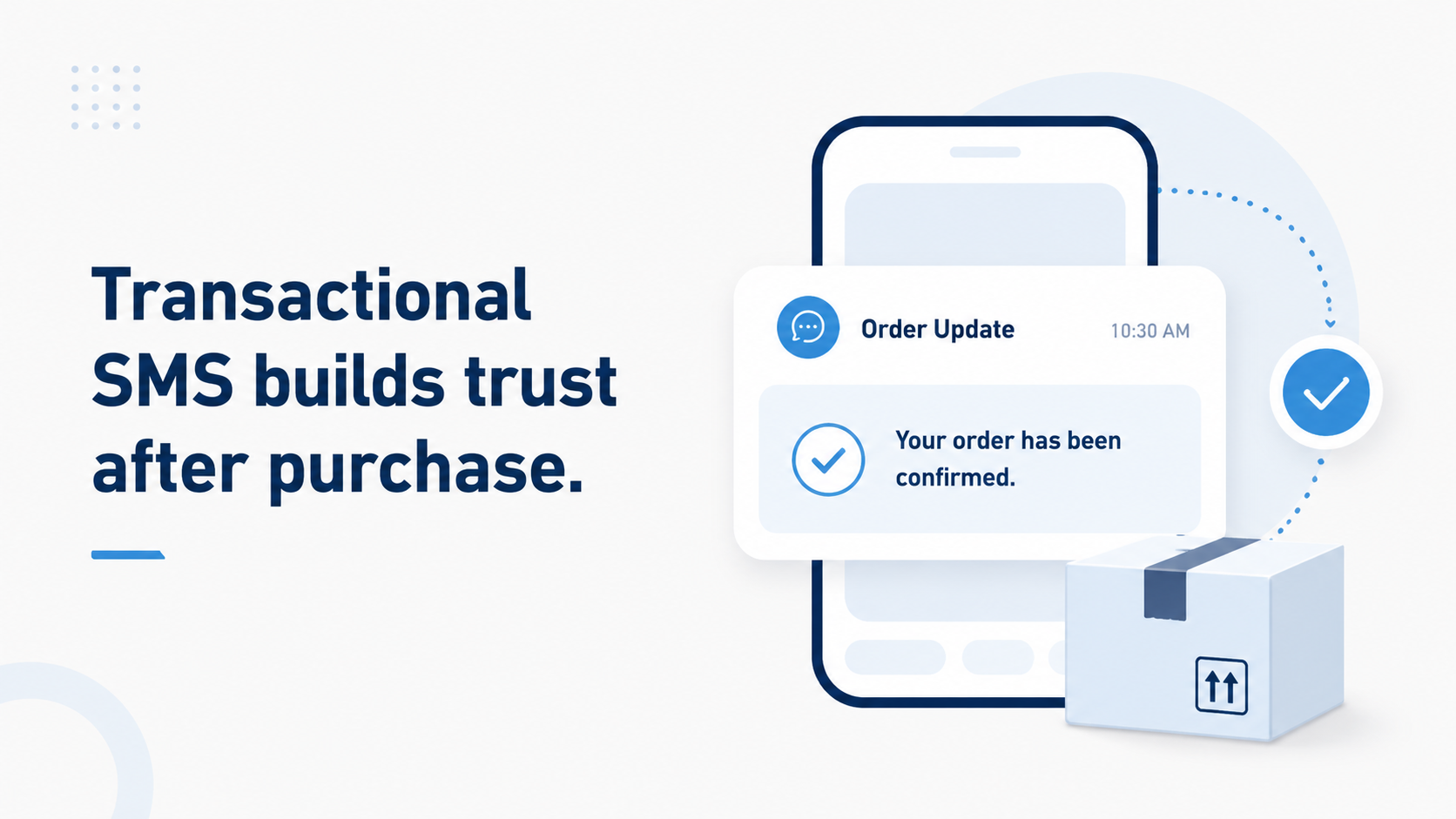
Stage 7: Reactivation → win back attention carefully
Reactivation is the most delicate stage. The customer has gone quiet, so your SMS needs a stronger reason to exist.
Do not reactivate people with generic “we miss you” messages unless the brand voice can carry it. Most of the time, customers care less about being missed and more about what changed.
What should a reactivation SMS include?
- unused loyalty points
- a relevant new offer
- a product category they liked
- an account benefit
- a renewal deadline
- a limited return incentive
- a practical update since their last visit
Examples of reactivation SMS messages
Your loyalty points expire on Sunday. Use them here: [link]
New arrivals in the category you liked are live: [link]
Your account is still active. See what changed since your last visit: [link]
Reactivation SMS should be rare and carefully segmented. If someone has not engaged for a long time, a flood of text messages will not rebuild trust. It will likely increase opt-outs. Every lifecycle program needs a clean opt-out SMS process. List quality matters more than list size, especially in a channel as direct as SMS.
How to connect SMS lifecycle flows with CRM and ecommerce tools
Lifecycle SMS depends on data. You need to know what stage the customer is in and what happened recently.
For product-led companies, SMS triggers should also support product roadmap alignment, so customer messages match the launches, onboarding steps, and account actions the business wants to prioritize.
Integrate SMS
That usually means SMS should connect with other systems, such as:
- ecommerce platform
- CRM
- booking system
- customer support tool
- marketing automation platform
- payment system
- event platform
- internal app
Without integration, teams often send SMS manually. That can work for one campaign, but it does not scale across the customer journey. In operational businesses, lifecycle SMS may also depend on systems outside marketing. For example, a procurement system could help trigger supplier, inventory, or internal status messages when a customer order depends on materials arriving on time.
A connected flow can work like this:
- Customer abandons cart.
- Ecommerce platform records the event.
- SMS flow waits a set time.
- The system checks if the order was completed.
- If not, it sends a cart reminder.
- The link contains tracking parameters.
- The team measures recovered revenue.
That is lifecycle messaging in practice.
For CRM-based sales and service workflows, an SMS integration with HubSpot can help connect text messages with pipeline, lead, and customer activity.
Teams can also choose how they want to operate SMS. Some campaigns work well from a web portal. Technical or automated flows often need API-based sending. A comparison of how to send SMS through API, app, or web portal can help match the setup to the team. If the company is still choosing the technical base, a SMS gateway starting guide is a useful starting point.
How to measure lifecycle SMS campaigns
SMS performance cannot be judged with one metric across every stage. A reactivation campaign, appointment reminder, order update, and cart recovery flow all have different jobs. That means each stage needs its own success metric.
| Lifecycle stage | Main metric | Supporting metric | What to watch |
|---|---|---|---|
| Acquisition | Opt-in rate | Source quality | Are subscribers joining for the right reason? |
| Activation | First action rate | Time to action | Are users moving forward faster? |
| Conversion | Revenue or completed action | Click rate | Are messages driving meaningful return? |
| Transactional | Delivery and completion | Support reduction | Are customers less confused? |
| Retention | Repeat purchase or repeat visit | Unsubscribe rate | Are messages helping people return? |
| Service | No-show reduction or reply rate | Support ticket volume | Are reminders reducing workload? |
| Reactivation | Returning customers | Opt-out rate | Are dormant users returning or leaving? |
Clicks are useful, but they do not tell the whole story. A service reminder may not need clicks at all. Its success may show in lower no-shows. A transactional SMS may succeed when support tickets drop. A cart reminder should connect to recovered revenue.
That is why SMS marketing KPIs should reflect campaign purpose, not only channel averages. For campaigns that send users to a website, use UTM SMS in GA4 so you can see what happens after the click. It also helps to run a regular SMS marketing audit to check consent, frequency, segmentation, links, campaign results, and database health.
Global lifecycle messaging: what changes across markets
International SMS lifecycle marketing needs more planning than translating the message. Phone number formats, sender names, country codes, delivery rules, local laws, time zones, holidays, and customer expectations can all change from market to market.
A reminder sent at a convenient time in one country may arrive at night in another. A sender name that works in one market may not work the same way elsewhere. A promotional message that feels normal in one region may feel too aggressive in another.
What to check before sending lifecycle SMS across countries?
- number format and country codes
- sender name availability
- local consent requirements
- time zones
- local language and tone
- message length after translation
- special characters
- delivery costs
- unsubscribe handling
- reporting setup
International SMS should still feel local to the customer. That is the real challenge. If your audience spans markets, plan how to send global SMS messages before copying one flow across every country.
Where SMSAPI fits into lifecycle SMS marketing
SMSAPI supports lifecycle SMS marketing because it gives businesses several ways to send, automate, track, and manage text communication.
Marketing teams can use the Customer Portal to send campaigns, manage contacts, shorten links, and review results. Developers can use API to connect SMS with systems such as ecommerce platforms, CRMs, booking tools, apps, and internal software. Ecommerce teams can use integrations to trigger messages from store activity. Support teams can use SMS reception to create two-way communication when replies matter.
That flexibility is important because lifecycle SMS is not one campaign type. It includes acquisition, activation, conversion, transactional updates, retention, service, and reactivation. Each stage may need a different setup.
Examples of lifecycle SMS communication
- a marketer may schedule a loyalty campaign
- a store may automate order updates
- a developer may send verification codes via API
- a service business may send appointment reminders
- a sales team may trigger follow-ups from CRM
- a global company may send localized messages across markets
SMSAPI also supports features such as sender names, short links, contact management, opt-out handling, global sending, and account security.
A recognizable sender can make messages feel more trustworthy, so it is worth setting up branded SMS messages when the market and use case allow it.
Short links are useful because SMS space is limited. They can also help with tracking, so it makes sense to use shortened links instead of wasting characters on long URLs.
Security also matters because SMS accounts can affect customer trust directly. Teams should know how to secure an SMSAPI account before giving access to more people or connecting automated flows.
Lifecycle SMS examples you can adapt
The easiest way to build SMS lifecycle marketing is to start with one stage and one clear trigger.
Do not build twenty flows at once. Start where the business loses the most value.
| Business problem | Lifecycle flow to test first | Example message |
|---|---|---|
| Too many abandoned carts | Cart recovery SMS | Your cart is still saved. Finish your order here: [link] |
| Missed appointments | Reminder SMS | Reminder: your visit is tomorrow at 14:00. |
| Low webinar attendance | Event reminder SMS | Your webinar starts in 30 minutes. Join here: [link] |
| Too many order questions | Shipping update SMS | Order #2910 has shipped. Track it here: [link] |
| Low repeat purchase | Replenishment SMS | Time to reorder? Your usual product is available here: [link] |
| Inactive customers | Reactivation SMS | Your loyalty points expire Sunday. Use them here: [link] |
| Low account activation | Setup reminder SMS | Finish setting up your account in 2 minutes: [link] |
Pick one flow. Set one goal. Track one main result. Then expand.
SMS lifecycle marketing checklist
Before launching a lifecycle SMS program, check the system behind it.
| Area | Question to answer | Why it matters |
|---|---|---|
| Consent | Did the customer agree to this type of SMS? | Protects trust and compliance |
| Stage | Where is the customer in the journey? | Keeps messages relevant |
| Trigger | What event should send the SMS? | Prevents random campaigns |
| Timing | When will the message help most? | Improves response |
| Copy | Can the user understand it in seconds? | SMS gives little space |
| Destination | Does the link match the message? | Protects conversion |
| Opt-out | Can the user leave easily? | Keeps the database clean |
| Measurement | Which metric proves success? | Avoids judging all campaigns by clicks |
| Integration | Which system should trigger the SMS? | Makes flows scalable |
| Security | Who can send and edit campaigns? | Protects customers and the brand |
This checklist keeps lifecycle SMS from becoming a messy automation pile. Every message needs a job.
Common lifecycle SMS mistakes
The first mistake is treating every phone number as a marketing contact. Consent must match the message type.
The second mistake is mixing transactional and promotional communication without a clear rule. An order update should not suddenly become a discount pitch unless the context makes sense and the consent allows it.
The third mistake is sending too many messages during one stage. A cart reminder can help. Four cart reminders can annoy.
The fourth mistake is using the same copy for every segment. A loyal customer, new lead, and dormant buyer need different context.
The fifth mistake is measuring every SMS against click rate. Some messages are meant to reduce support tickets, confirm actions, or prevent no-shows. Clicks may not matter there.
The sixth mistake is building automations and never auditing them. Lifecycle flows can age badly. Offers expire, links change, wording becomes outdated, and customer expectations shift.
<strong>Key takeaways</strong>
- SMS lifecycle marketing maps text messages to customer stages, not campaign dates.
- The goal is not to send more SMS messages, but to send more useful ones.
- Acquisition starts with clear consent and a strong reason to subscribe.
- Activation SMS helps new users or leads take the first meaningful action.
- Conversion SMS works best when timing affects revenue, such as cart recovery, restock alerts, or webinar reminders.
- Transactional SMS reduces uncertainty after customer actions.
- Retention SMS should support repeat value without sounding like constant promotion.
- Service SMS can reduce missed appointments, support questions, and manual follow-up.
- Reactivation SMS needs care because dormant customers are easier to lose.
- SMSAPI can support lifecycle messaging through the Customer Portal, API, integrations, global SMS sending, short links, sender names, opt-out handling, reporting, and SMS reception.
Conclusion
SMS marketing becomes much stronger when it follows the customer journey. A single campaign may drive a quick result, but lifecycle SMS creates a system.
That system can help people subscribe, act, buy, receive updates, return, solve problems, and come back after a break. Each message has a reason. Each stage has a goal. Each flow connects to a real customer moment.
The best place to start is not with a huge automation map. Start with the stage where SMS can remove the most friction. For many businesses, that will be cart recovery, appointment reminders, order updates, or reactivation. Build one strong flow, measure it properly, then expand.
SMS gives you very little space. Lifecycle strategy helps you use that space well.
Test SMSAPI
Create a free account at SMSAPI and test the professional SMS gateway for companies.
FAQ
What is SMS lifecycle marketing?
SMS lifecycle marketing means sending text messages based on where a customer is in their journey. It can include acquisition, activation, conversion, transactional updates, retention, service, and reactivation.
How is SMS lifecycle marketing different from bulk SMS?
Bulk SMS usually means sending one message to a larger audience. SMS lifecycle marketing uses triggers, segments, and customer stages to send more relevant messages. Bulk campaigns can still be part of the strategy, but they should not be the whole strategy.
Which lifecycle SMS should be automated first?
Start with the flow that solves the clearest business problem. Ecommerce brands often start with cart recovery or order updates. Service businesses often start with appointment reminders. B2B teams may start with webinar reminders or lead follow-up.
Can SMS lifecycle marketing work for B2B?
Yes. B2B teams can use SMS for webinar reminders, event updates, demo confirmations, lead follow-ups, account alerts, and service communication. SMS should support high-intent moments rather than replace email education.
How often should lifecycle SMS messages be sent?
Frequency depends on the customer stage and message value. Transactional updates can be sent whenever they are needed. Promotional and reactivation SMS should be more limited, especially if engagement is low.
How do you measure lifecycle SMS campaigns?
Use different metrics for different stages. Cart recovery should track recovered revenue. Appointment reminders should track no-show reduction. Transactional SMS should track delivery and support reduction. Promotional SMS should track conversions, revenue, opt-outs, and post-click behavior.
What tools do you need to start SMS lifecycle marketing?
You need a reliable SMS platform, a clean contact database, consent management, tracking links, reporting, and ideally integrations with your CRM, ecommerce platform, booking system, or app. API access becomes important when SMS messages need to trigger from customer behavior.
Where does SMSAPI fit into lifecycle SMS marketing?
SMSAPI helps businesses send, automate, and manage SMS communication through the Customer Portal, API, integrations, global SMS gateway, reporting, opt-out handling, short links, sender names, and SMS reception. That makes it useful for both marketing and transactional lifecycle messages.